My lab develops research tools that help communities, researchers, and public-interest organizations collect, interpret, and act on data. Below, you'll see a few systems created by our group and collaborators, including tools for civic data analysis, participatory science, responsible AI, and public-sector decision-making. In the descriptions below * indicates students.
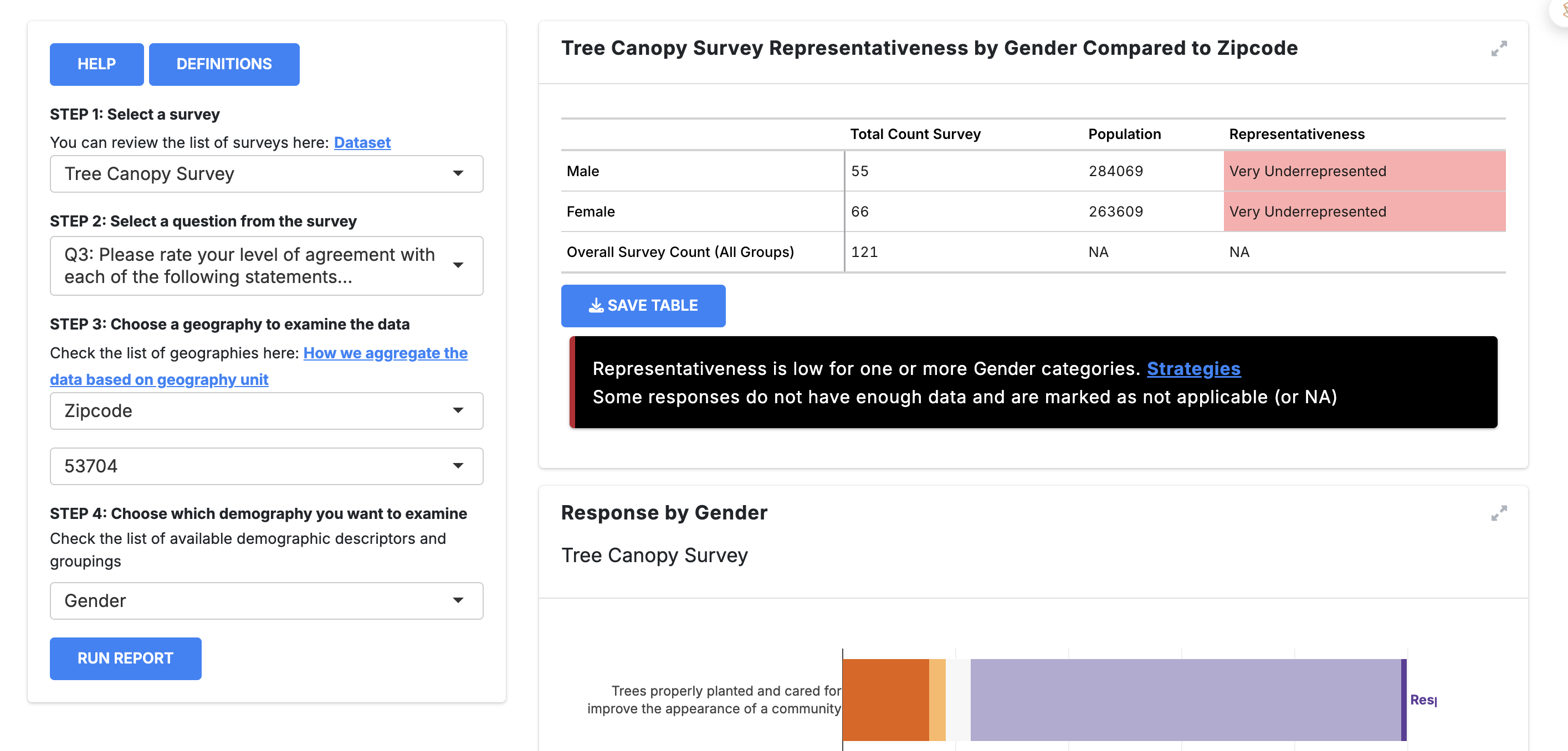
A community data exploration tool built around surveys designed and administered by our research group.
Knowledge Map 1.0 helps people explore data collected through surveys designed and administered by our research group. The system was created to make community and civic data more accessible by turning survey responses into interactive summaries and visual views. Rather than requiring users to analyze raw spreadsheets, the tool presents structured results in ways that support interpretation, communication, and public-facing discussion. This version focuses on curated datasets from our own studies, allowing us to design the survey, data structure, and visualizations together as one research workflow.
Knowledge Map 2.0 expands the original Knowledge Map workflow so that researchers, community groups, and civic organizations can upload their own CSV-style survey datasets. Users can identify important columns such as geography, demographics, and survey questions, then generate visual summaries directly in the browser. The tool supports workflows for comparing community-generated datasets with public benchmarks, including Census-backed demographic comparisons where appropriate. More broadly, this version reflects our group’s interest in building accessible data tools that help communities examine representativeness, surface local knowledge, and communicate findings to public audiences.
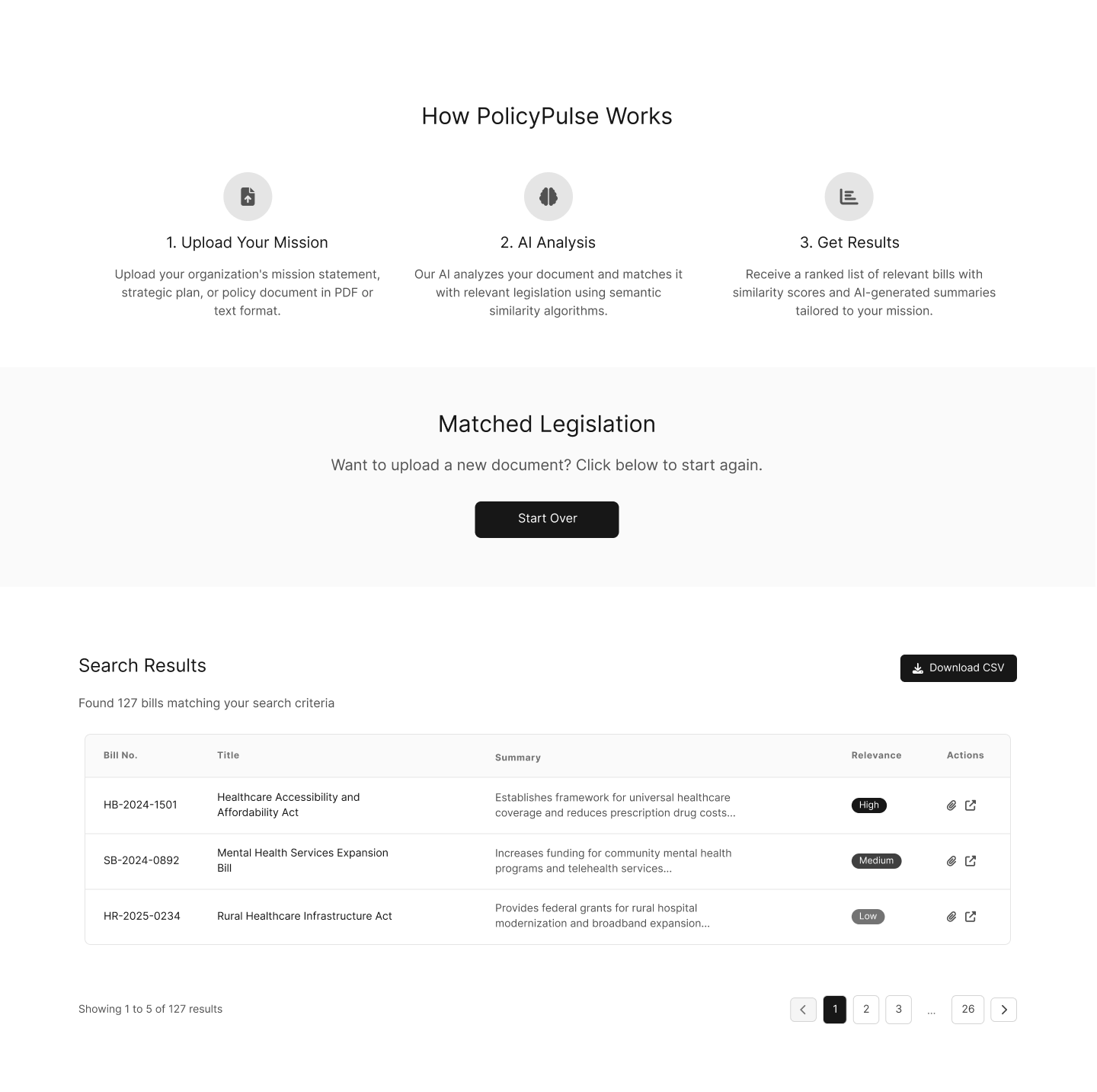
A public-interest technology tool for helping organizations identify and understand legislation relevant to their mission and work.
PolicyPulse is designed to help organizations compare their mission statements, programs, or internal documents with state and federal legislation. The tool supports users in finding bills that may be relevant to their priorities, communities, or areas of advocacy. Rather than assuming that users have time to monitor legislative databases directly, PolicyPulse aims to translate policy activity into more accessible summaries and connections. This project reflects our broader interest in building tools that help civic and public-interest organizations participate more effectively in data- and policy-intensive environments.
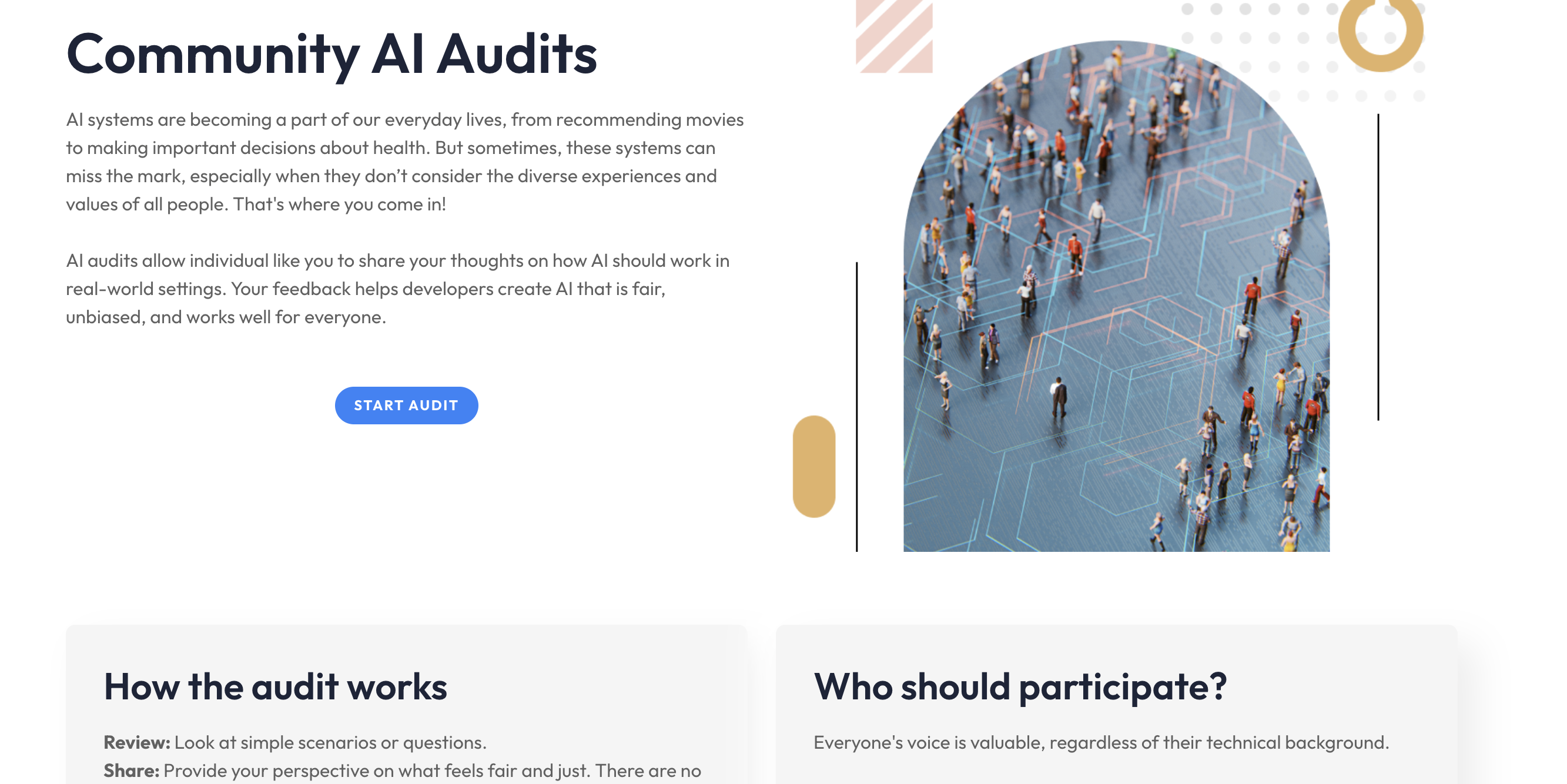
An interactive tool for helping people reason about fairness, risk, and potential harms in AI-supported decision-making systems.
The AI Fairness Tool supports reflection on how AI systems may affect different people and groups in public-sector or high-stakes decision-making contexts. It is designed to help users examine questions of fairness, risk, and potential negative consequences rather than treating AI evaluation as only a technical performance problem. The tool can be used for teaching, research, or public engagement around responsible AI and algorithmic accountability. It reflects our group’s broader work on participatory AI auditing, where community members and non-experts are supported in evaluating how AI systems align with public values and lived experience.
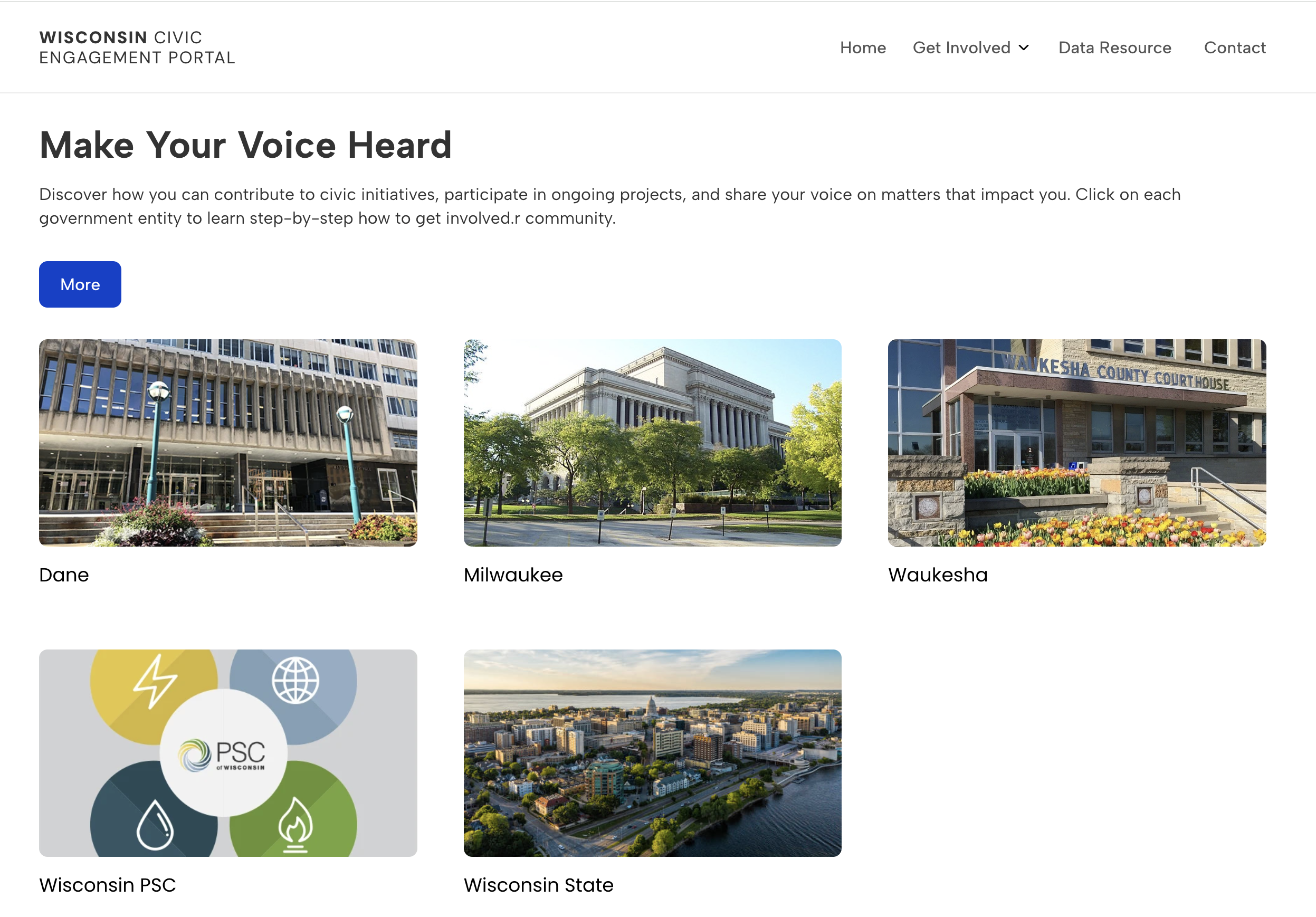
A public-facing resource for highlighting civic technology, civic data, and public-interest computing work in Wisconsin.
Civic in Wisconsin is a web-based resource that presents civic technology and public-interest computing work connected to Wisconsin. The site is designed to make this work more visible to students, researchers, community organizations, and public-sector partners. It provides an accessible entry point for learning about civic data, responsible technology, and community-centered computing efforts in the state. More broadly, the project reflects our group’s commitment to connecting research, public engagement, and local civic infrastructure.